winph,com,login,register Probability in Casino Games
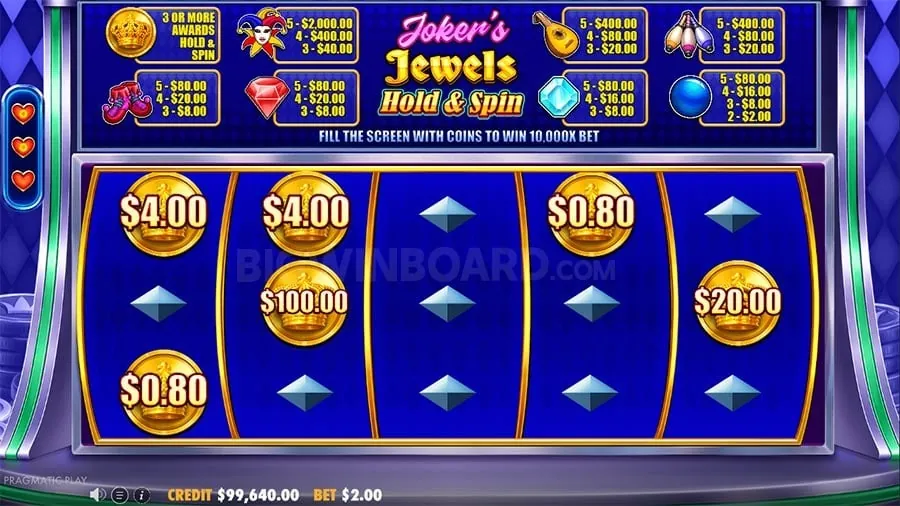
Mastering Casino Games: Understanding Probability with winph, com, login, register
Welcome to the exciting world of online casino gaming, where strategy meets chance. For players looking to enhance their experience and make more informed decisions, understanding the fundamental principles of probability is key. On platforms like winph, com, login, register, millions of players engage with a vast array of games, each governed by its own set of mathematical odds. This guide aims to demystify the concept of probability in casino games, transforming it from an abstract idea into a practical tool for smarter play. Whether you're spinning the reels of a slot machine, facing off against the dealer in blackjack, or placing your bets on the roulette wheel, knowing your chances can significantly impact your approach. We'll delve into what probability means, how it influences different game outcomes, and how you can leverage this knowledge to navigate the thrilling landscape of online casinos. By the end of this article, you'll have a clearer perspective on how odds work, empowering you to play more strategically and responsibly on your preferred gaming site.
Understanding the Basics: What is Probability in Casino Games?
At its core, probability is the mathematical likelihood of an event occurring. In casino games, this translates to the chance of a specific outcome, such as hitting a jackpot, drawing a certain card, or landing on a particular number. While gambling is often associated with luck, every game is underpinned by precise mathematical probabilities. Understanding these probabilities doesn't eliminate the element of chance, but it provides players with a clearer picture of the risks and potential rewards involved.
For instance, if you flip a fair coin, the probability of it landing on heads is 1/2 or 50%. This simple example illustrates how probability quantifies uncertainty. In casino games, the calculations become more complex, involving multiple variables, but the principle remains the same. Knowing these odds allows players to make informed decisions about which bets to place, which games to play, and how to manage their bankroll effectively. It's about shifting from purely guessing to making educated choices.
Online platforms like winph provide an accessible environment to explore these concepts. Before you login and start playing, a basic grasp of probability can significantly enhance your gaming journey, moving you from a passive participant to a more engaged and strategic player.
Calculating Your Chances: Key Probability Metrics
While you won't need to be a mathematician to enjoy casino games, familiarity with a few key probability metrics can be incredibly beneficial. The two most important concepts are the House Edge and Return to Player (RTP).
House Edge
The House Edge represents the casino's built-in advantage over the player. It's expressed as a percentage and indicates the average profit the casino expects to make from each bet over the long run. For example, if a game has a 2% house edge, it means that for every ₱100 wagered, the casino expects to keep ₱2 over an extended period. This edge is what allows casinos to operate and profit.
- Roulette: European Roulette (single zero) typically has a house edge of 2.70%, while American Roulette (double zero) has a higher edge of 5.26%.
- Blackjack: With perfect basic strategy, the house edge can be as low as 0.5% to 1%.
- Baccarat: The Banker bet usually has the lowest house edge, around 1.06%.
Understanding the house edge helps you choose games that offer better odds, thereby maximizing your potential playtime and minimizing losses in the long term.
Return to Player (RTP)
RTP is primarily used for slot games and indicates the theoretical percentage of all wagered money that a slot machine will pay back to players over time. If a slot game has an RTP of 96%, it means that, on average, for every ₱100 wagered, the game will return ₱96 to players, keeping ₱4 as the house edge. It's crucial to remember that RTP is a long-term average and doesn't guarantee results for any single session. A higher RTP generally means better value for the player.
Platforms like winph.com often display the RTP for their slot games in the game information section, allowing players to make informed choices. When you register and explore, always check for these details.
Probability in Action: Game-Specific Examples
Let's look at how probability manifests in some popular casino games available on winph:
Slot Machines
Slot machines are perhaps the most popular casino games, and they operate on Random Number Generators (RNGs). An RNG ensures that each spin is an independent event, and the outcome is entirely random. The probability of hitting a specific symbol combination is fixed by the game's design and its RTP. While you can't influence the outcome of a single spin, understanding RTP and volatility (how often and how much a slot pays out) can help you choose games that align with your playing style and bankroll.
For example, a high volatility slot might have less frequent but larger wins, while a low volatility slot offers more frequent but smaller payouts. Both have a fixed RTP, but the probability distribution of wins differs. Always check the game details after you login to winph.
Blackjack
Blackjack is unique because player decisions can significantly alter the house edge. By following a 'basic strategy' – a statistically derived set of rules for every possible hand combination – players can reduce the house edge to its minimum. This strategy is based on the probability of the dealer busting and the probability of drawing a favorable card. Knowing when to 'hit,' 'stand,' 'double down,' or 'split' isn't guesswork; it's a probabilistic decision.
Roulette
Roulette is a game of pure chance, but probabilities vary greatly depending on the type of bet. For instance, betting on a single number in European Roulette has a probability of 1/37 (2.70%), while betting on 'red' or 'black' has a probability of 18/37 (48.65%). The payouts are adjusted to reflect these probabilities, ensuring the casino maintains its house edge regardless of the bet type. Choosing European over American Roulette already improves your odds due to the single zero.
Baccarat
Baccarat is often seen as a sophisticated game, but its probabilities are straightforward. There are three main bets: Player, Banker, and Tie. The Banker bet has a slightly higher probability of winning, hence the small commission usually taken on winning Banker bets. The Tie bet, while offering a much higher payout, has a significantly lower probability of occurring, making it a high-risk, high-reward option.
Beyond Luck: Leveraging Probability for Smarter Play
Understanding probability isn't about finding a foolproof way to beat the casino; it's about making smarter, more informed choices that can extend your playtime and potentially improve your overall experience. Here’s how you can leverage this knowledge:
- Game Selection: Choose games with a lower house edge or higher RTP. For example, playing European Roulette instead of American, or opting for Blackjack if you're willing to learn basic strategy. Many high-RTP slots are available on winph.com.
- Bankroll Management: Probabilities help you understand the volatility and expected returns of games, allowing you to set realistic budgets and betting limits. Don't chase losses; stick to your plan.
- Strategic Play: In games like Blackjack and Video Poker, where decisions influence outcomes, applying optimal strategy based on probabilities is crucial. This is where your knowledge directly impacts your chances.
- Setting Realistic Expectations: Acknowledging the house edge means understanding that the casino has a long-term advantage. This helps manage expectations and promotes responsible gaming.
By applying these principles, you transform your gaming from pure chance to a more calculated and enjoyable pursuit. Ready to put your knowledge to the test? You can register today and login to winph to explore games with confidence.
Common Misconceptions and Important Considerations
While understanding probability is empowering, it's equally important to dispel common myths and maintain a responsible approach to gaming.
The Gambler's Fallacy
This is the mistaken belief that past outcomes influence future independent events. For example, if a coin lands on heads five times in a row, some might believe tails is